Life-Saving Functionality
Transforming the Heat Safety Tool into the #1 Downloaded CDC App
When I began my tenure with Maximus/Attain working as a senior iOS developer for NIOSH (part of the CDC), my first task was to take over the maintenance and production of what is now the OSHA-NIOSH Heat Safety Tool.
This is an app that, based on a user’s location, keeps workers safe from the threat of heat related illness. It has since been featured on heat.gov and the Weather Channel.
Working with a gifted team of federal workers and contractors, we went to work envisioning how the app could be better.
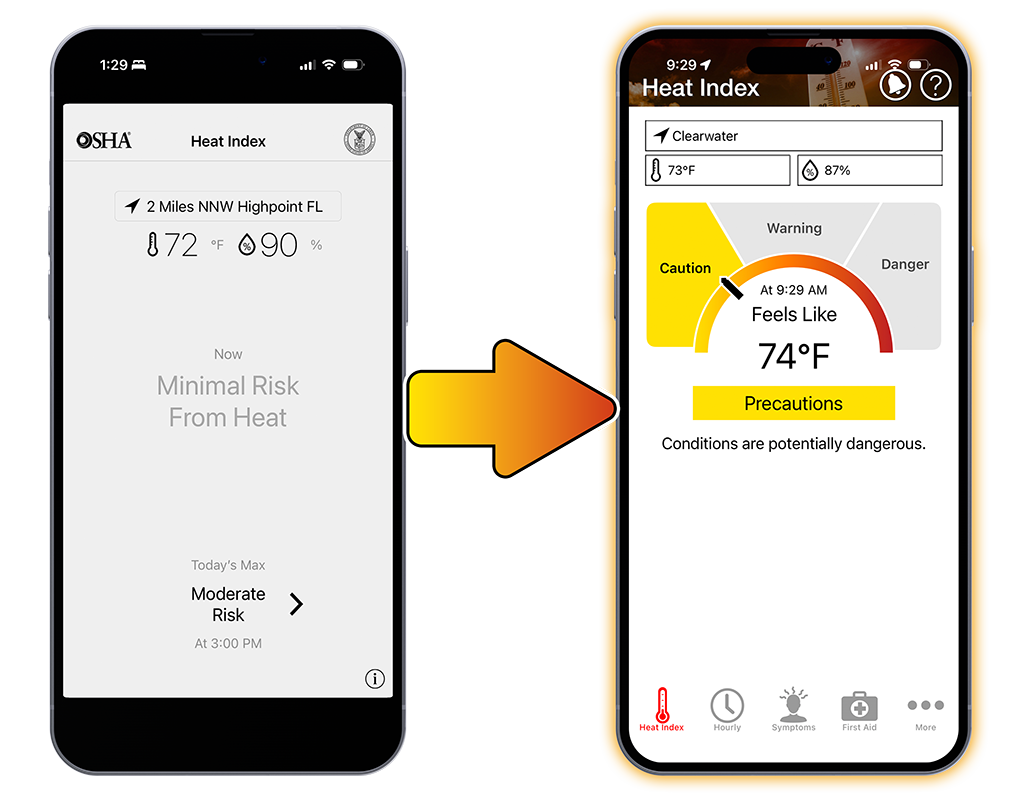
The original OSHA app had been outsourced. It had great bones to begin with. In fact a lot of the functionality was there, but it was hidden. It also lacked visual indication of the information being communicated.
We immediately identified key areas which needed improvement:
- A lot of functionality was hidden behind a small ⓘ “information” button in the lower right of the screen. In short, what should have been a tabbed application, was a single screen application.
- The app used color and labels as key indicators of the current threat level, without a visual indication of how close to the next threat level they might be.
- The app gave the maximum predicted threat level, but no indication of how the threat level is predicted to change throughout the day.
There were many other improvements we made to the app over its life, but these were the key improvements.
Proposed Solutions
The first improvement I suggested was the easiest: make the app a tabbed application. This allowed us to not only make it convenient to surface life-saving first aid and symptoms information, but to add an hourly forecast, all of which is easily navigable via icons at the bottom of the screen.
The second improvement was a visual indicator of the current threat level pictured below:
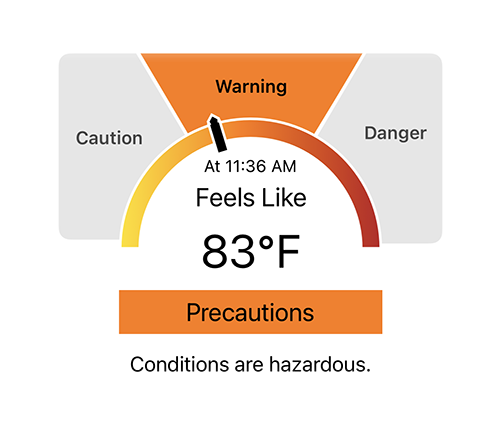
This animated gauge not only shows the current threat level, but displays how close the user is to the next threat level, has a custom button leading to specific precautions they can take based on the threat level, and contains a label which displays a brief explanation of the current conditions as well as any disclaimer information which is pertinent to their situation.
The third improvement was to create an hourly carousel view indicating how the user’s threat level was predicted to change throughout the day. See below:
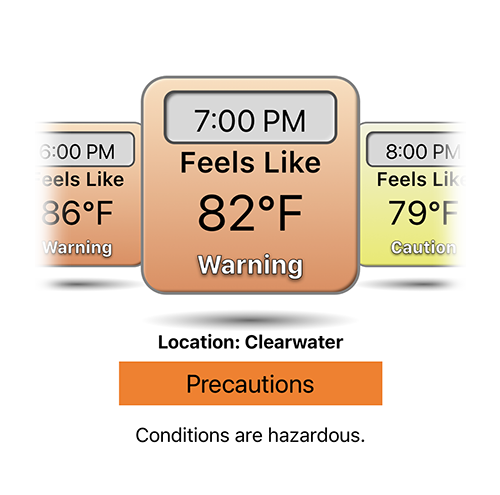
This interactive UI element allowed the user to not only see the maximum threat, but to see how the heat index will change throughout the day so they might plan their day accordingly.
Results
At last check, the iOS version (which I designed/developed) has been downloaded over 5.8 million times, making it the top-downloaded CDC app. Even today it ranks 129th in Apple’s daily most downloaded weather apps.
I was personally honored by Attain receiving an “Attain Way” award and later by Maximus being featured in Maximus’ “Success Stories.”
The team I worked with (see below) were also honored by NIOSH to receive the 2018 Bullard-Sherwood Award.
More than this, I have met American workers who have personally told me they use the app on a regular basis to protect themselves.
Future/Legacy
2018 Bullard-Sherwood Recipients
Garrett Burnett, Brenda Jacklitsch, Gino Fazio, Kelly Schnapp, Joe Cauley, Tom Ebert, Roger Pingleton, Bill Scholtes, Michael Pulsifer, Giridhar Bandi, Sue-li Yao, Stephanie Stevens, Ted Teske, Joanna Watson, Vanessa Williams, Nicole Romero, Deborah Hornback.